Shopping Cart
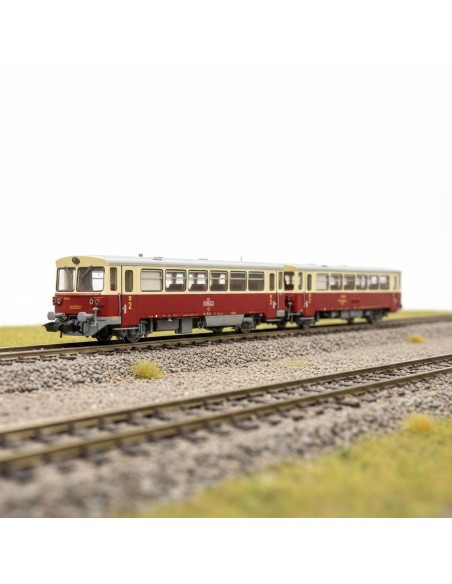
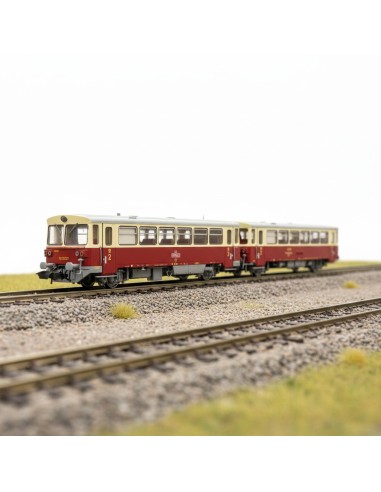
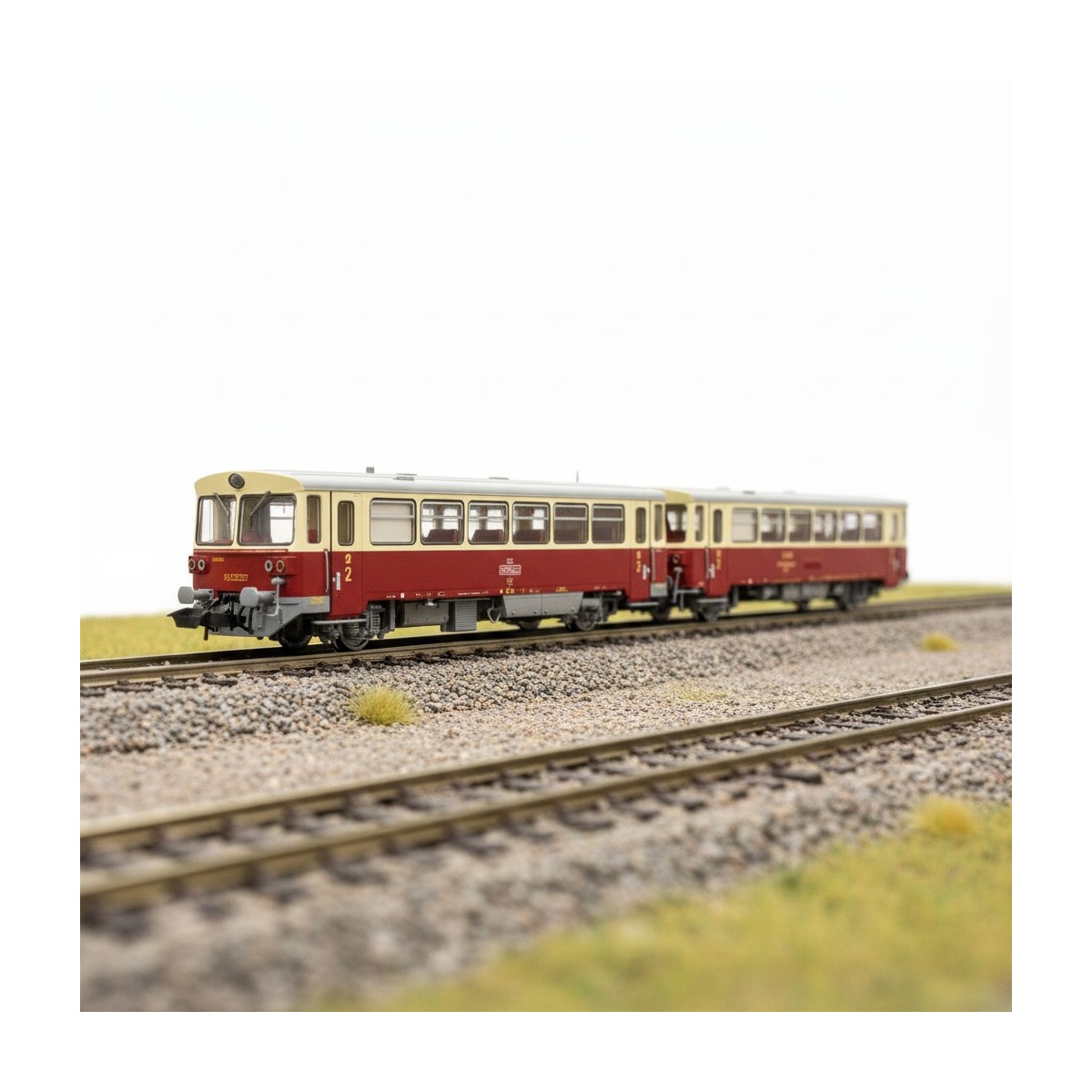
The ČSD M 152.0 diesel railcar is one of the most recognisable vehicles on the Central European railway scene, and Roco presents it here with a completely renewed tooling. The set includes railcar M 152.0059 and trailer coach Blm 24-29 083 coupled together, ready to run digitally with sound straight out of the box. The two-tone Traffic Red and Cream livery, with a light grey roof and black underframe, faithfully reproduces the factory scheme of Epoch IV as these vehicles operated through the seventies and eighties on Czechoslovak branch lines.
Dual decoder and high-resolution sound
The electronics in this set are one of its most carefully developed features. The railcar carries a sound decoder with a PluX16 interface (NEM 658) that reproduces the characteristic rattle of the six-cylinder diesel engine, the hydromechanical gear changes, the pneumatic compressors, the whistle, the ČSD-specific horn, brake shoe squeal and station announcements. The Blm trailer coach has its own independent function decoder, allowing its lighting map to be managed without any physical wiring between the two bodies. The integrated energy buffer also absorbs micro-interruptions when passing over insulated frog turnouts, preventing flicker or sound drop-outs at the most critical points of the run.
Lighting, detail and optional accessories
Both coaches feature directional LED lighting three white front lights and two red rear lights, switchable according to the direction of travel plus independently switchable interior LED lighting in each unit. The wide windows reveal a detailed interior with seats, luggage racks and cab partitions. The box includes a set of optional accessories: closed front skirts for static display in a cabinet, windscreen wipers, brake hoses and access handrails. The outer couplers follow NEM 362 with short Roco heads for stable push-pull operation.
On the layout: branch line rhythm and local atmosphere
With a total coupled length of 322 mm and a minimum radius of 358 mm, this unit fits comfortably on medium-sized layouts focused on Epoch IV branch lines or rural routes. In a small station scene, the railcar-and-trailer combination conveys that sense of local service that defines the character of these lines: a short, functional train with plenty of sound and visual personality. The central motor with flywheel and the two powered axles of the railcar deliver smooth, continuous running, so the unit travels naturally even through sections with turnouts or curves at the minimum radius.