
Shopping Cart
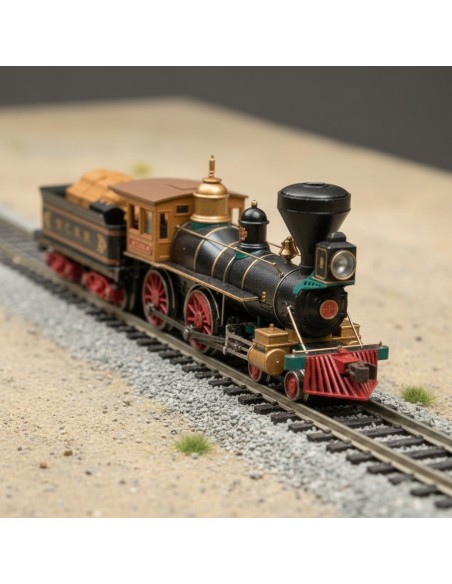
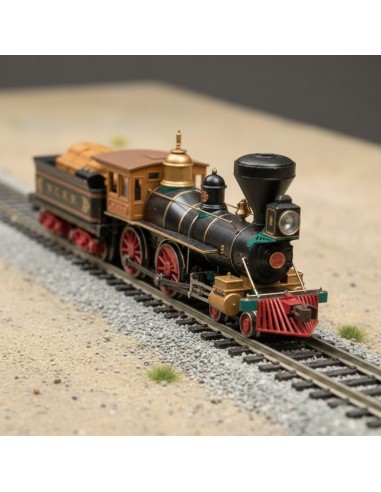
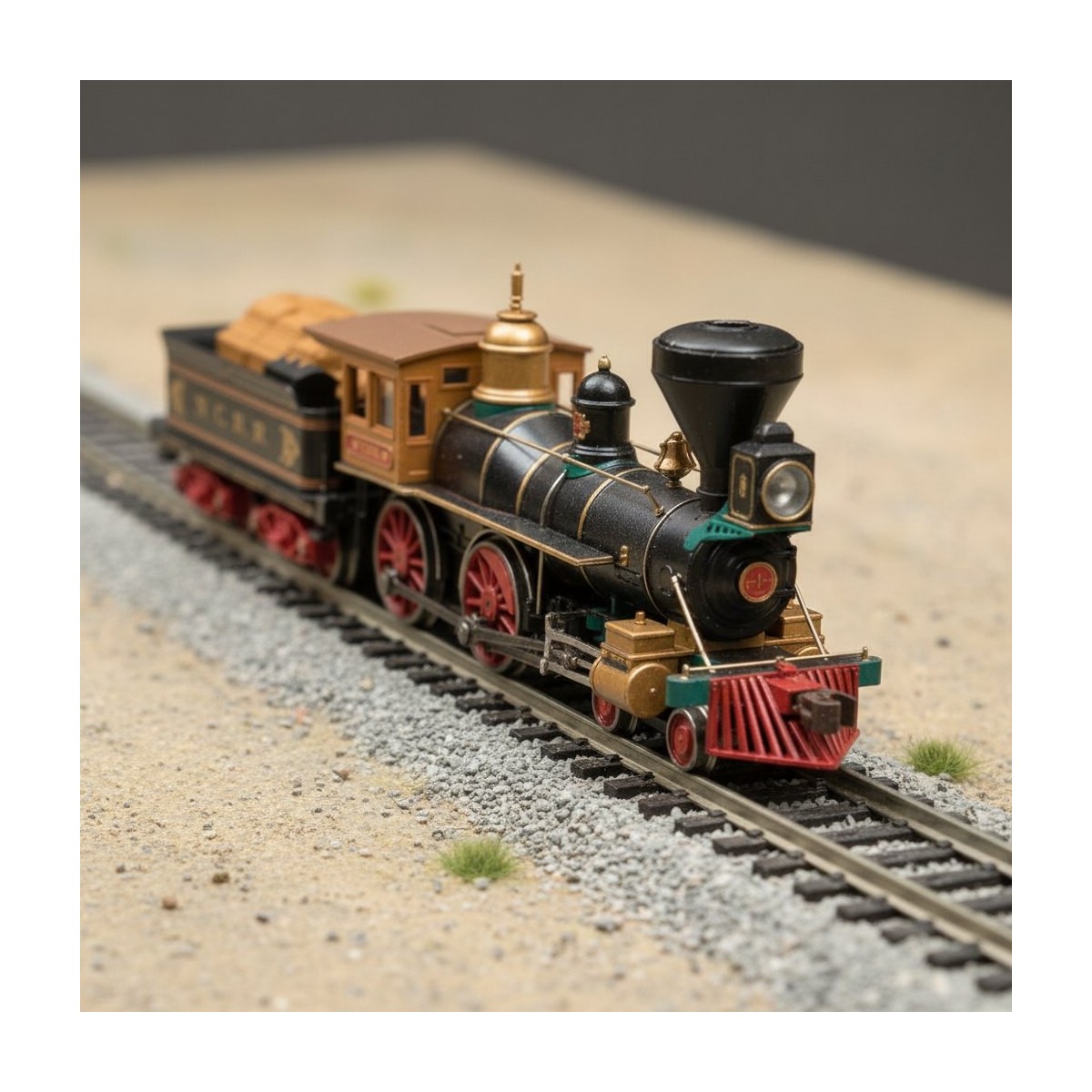
The Bachmann 52706 reproduces in HO scale the 4-4-0 American steam locomotive of the Northern Central Railroad, road number #17 «The York». It is a model that combines a complete electronic package with a level of mechanical and visual detail rarely found at this price point: die-cast metal chassis, separately applied handrails, pipework, domes and metal bell, painted interior cab, and a tender loaded with wood rather than the usual coal entirely consistent with the era it represents.
Sound and digital control with SoundTraxx Econami decoder
The SoundTraxx Econami dual mode decoder works on both DCC layouts compatible with NMRA/NEM standards and conventional DC analogue track. The 16-bit polyphonic sound includes exhaust chuff automatically synchronised to speed, short and long whistles, bell, air pump, blower and steam release. Sound and lighting functions are freely reassignable between F0 and F28 via Flex-Map technology, and the Hyperdrive2 motor control delivers smooth slow-speed running and progressive start-up. The front LED headlight features a flicker effect that replicates the warm glow of a period oil lamp.
Construction and hand-applied details
The die-cast metal chassis adds weight and stability on the track. The drive mechanism is fully concealed within the boiler, allowing a see-through frame with an authentic open-frame design. The driving wheels are blackened metal with fine spokes and low-profile RP25 flanges, ensuring high compatibility with fine-scale turnouts. E-Z Mate Mark II couplers at both ends are compatible with the Kadee system.
On the layout: a 4-4-0 with its own story at the head of the consist
In a period consist, the distinctive silhouette of the 4-4-0 American wide smokestack, prominent headlight and wood-loaded tender sets the visual tone of the train from the very first car. At 19 cm overall length for locomotive and tender combined, it fits comfortably on layouts with curves from 45 cm radius, and can negotiate down to 38 cm in tighter spaces. The speed-synchronised sound adds a layer of railway atmosphere that is especially noticeable on slow station approaches or during steam-release stops.