
Shopping Cart
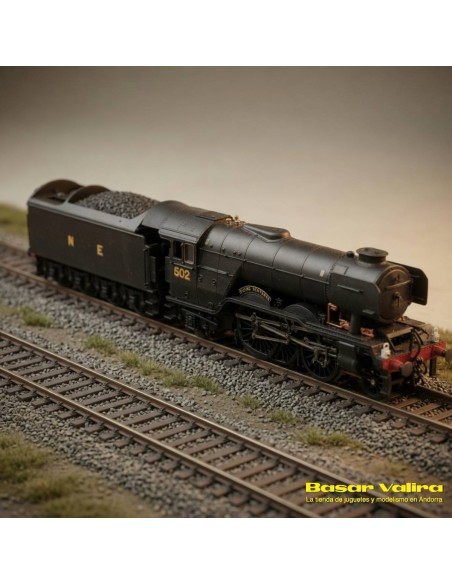
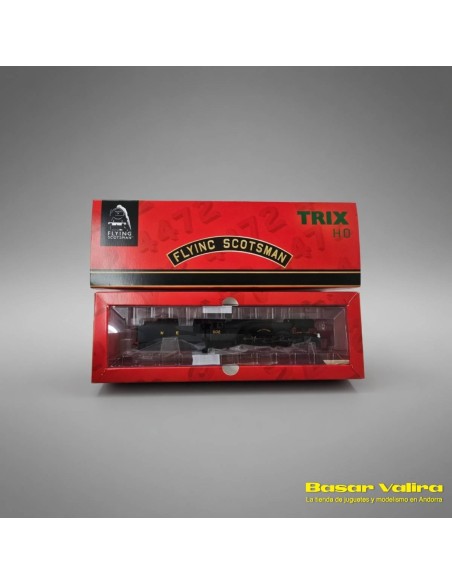
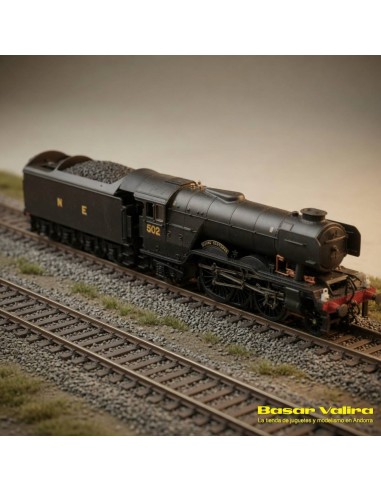
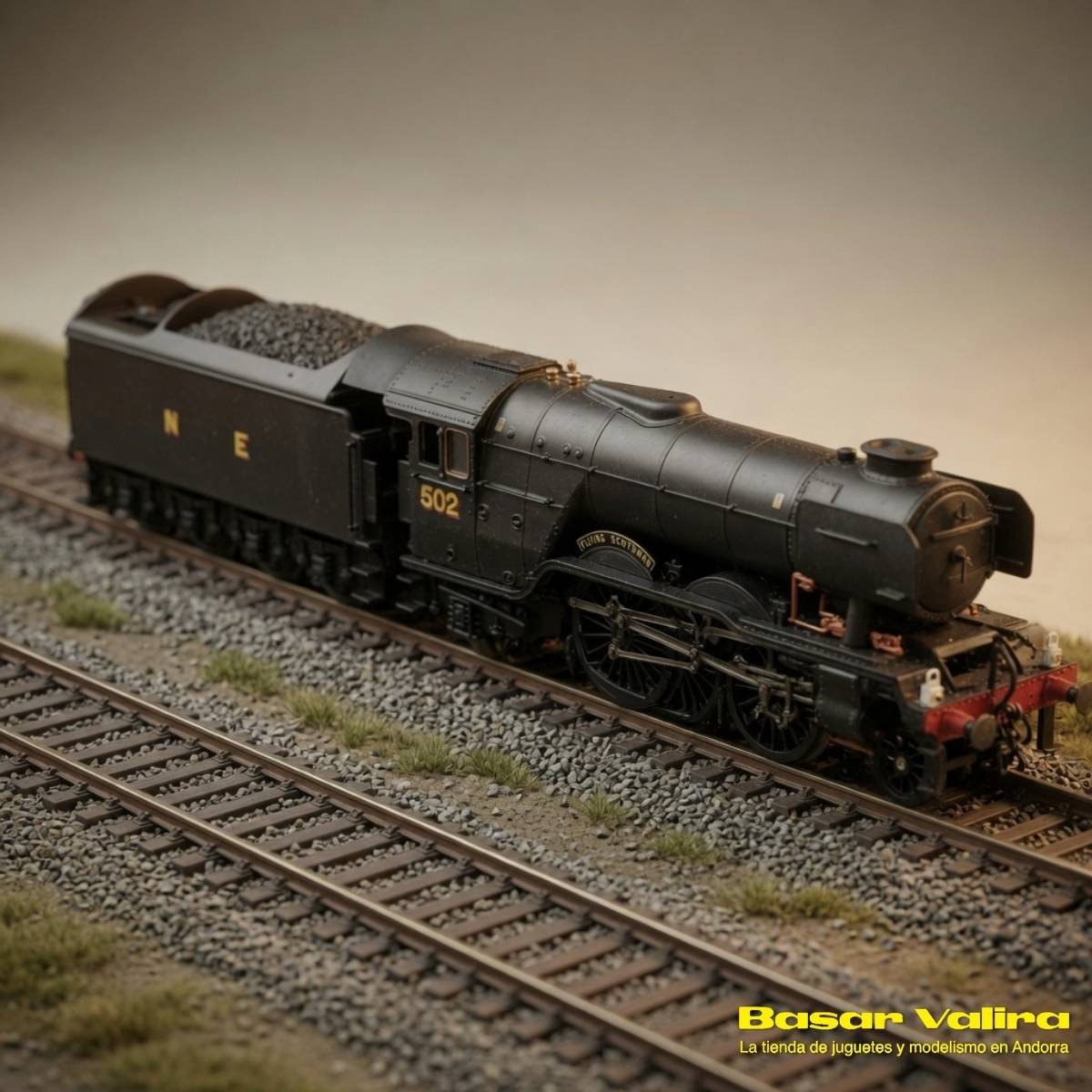

The Flying Scotsman is one of the most recognisable steam locomotives in British railway history, and Trix presents it in this reference 22885 under official licence from the National Railway Museum in York. The chosen version is the wartime black livery, an austere finish that the Class A3 carried through years of service under exceptional conditions and one that stands out on a layout today precisely because of its restraint.
Digital with sound, smoke and details controlled from the handset
The included decoder is compatible with DCC, mfx and RailCom, and manages an extensive set of functions: full sound, dynamic smoke unit with variable speed, directional lights on the locomotive, rear lamp on the tender switchable between red and white, switchable third front light, cab and tender corridor lighting digitally controllable with warm white LEDs, and firebox flicker. All of this in a mostly metal construction with high-performance drive, flywheel in the boiler and three powered axles with traction tyres.
Finish and applied details
The reference includes applied metal details, closed cylinder covers, brake hoses and imitation screw couplers. The short NEM coupling with kinematic mechanism handles curves naturally. The locomotive can be represented with three different service numbers, giving some flexibility when integrating it into different consists or period scenes.
On the layout, a presence that is hard to ignore
At 24.5 cm total length between locomotive and Corridor tender, the Flying Scotsman takes up a considerable amount of space on the track plan. In a station scene or at the head of an Era VI passenger consist, its elongated silhouette and wartime black give it a visual weight all of its own. The Corridor tender, with its controllable interior lighting, adds continuity to the whole and reinforces the feeling of a complete train. A piece that, whether in a display case or on the track, never goes unnoticed.