
Shopping Cart
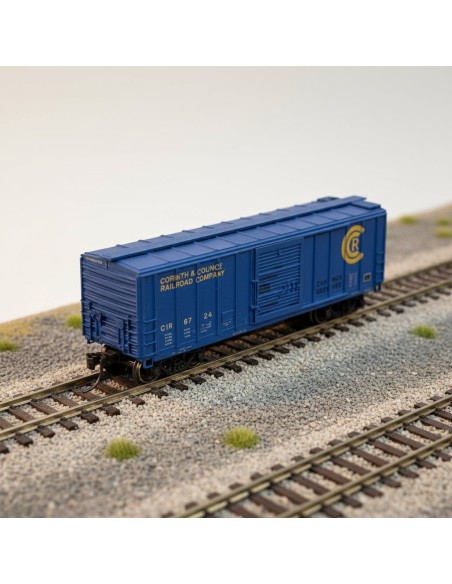
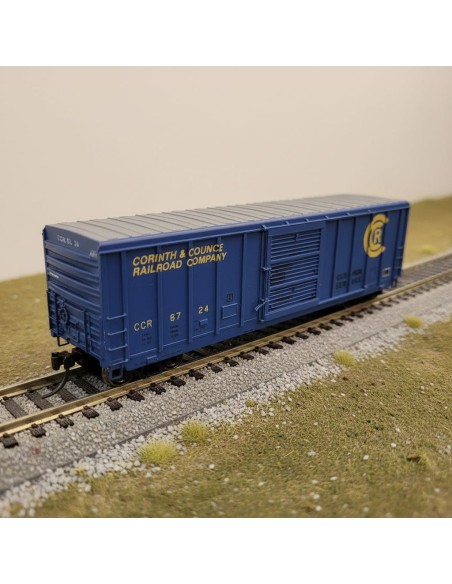
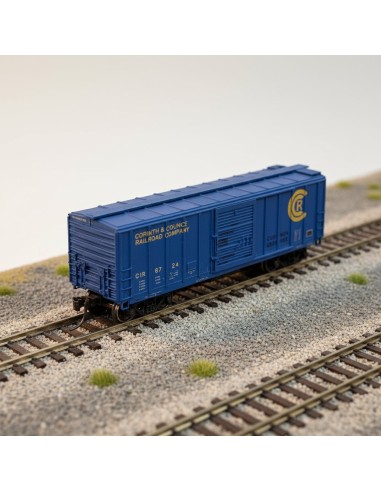
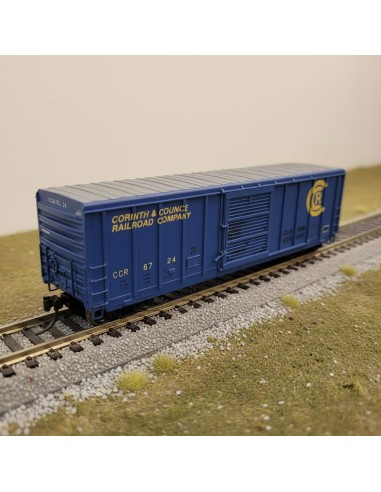
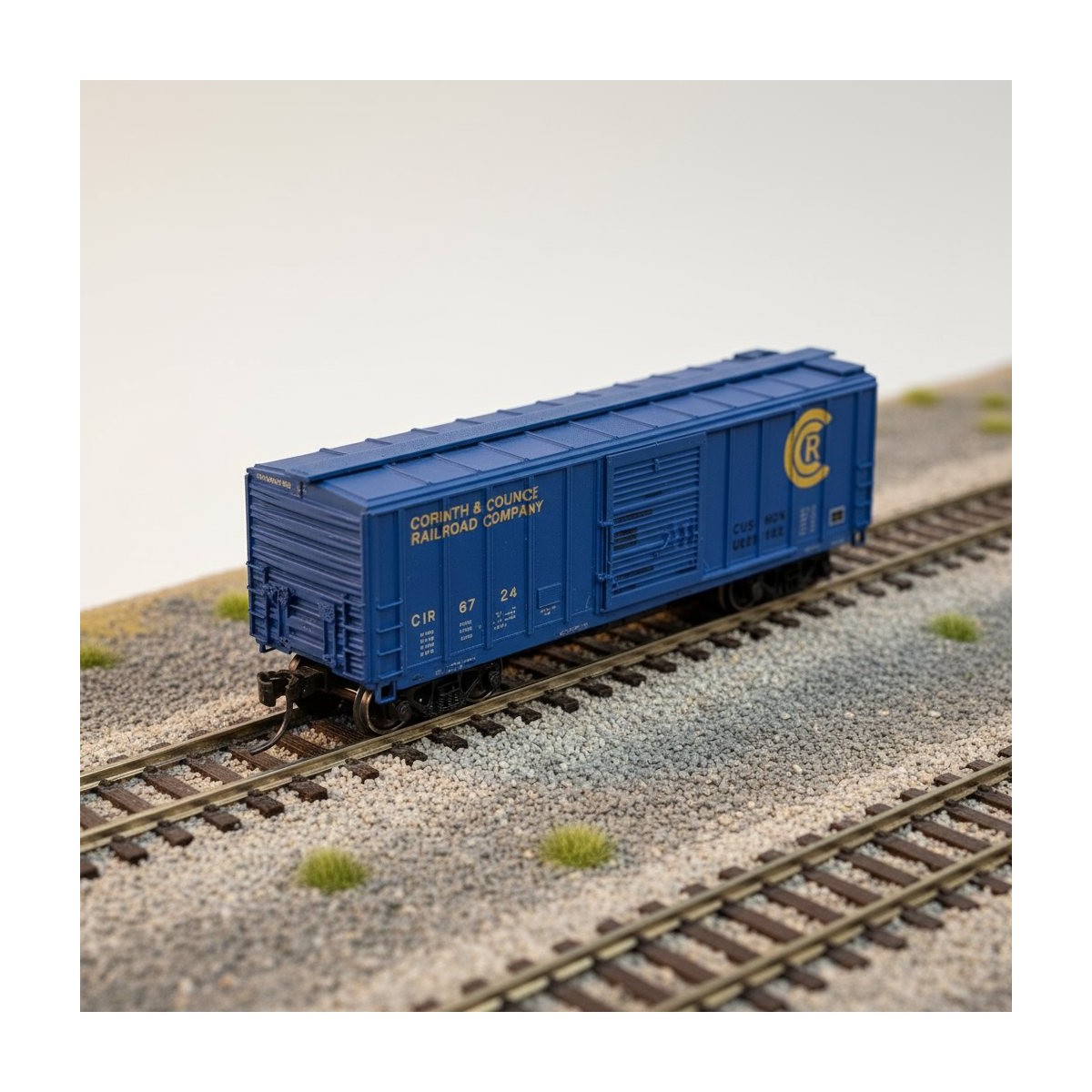
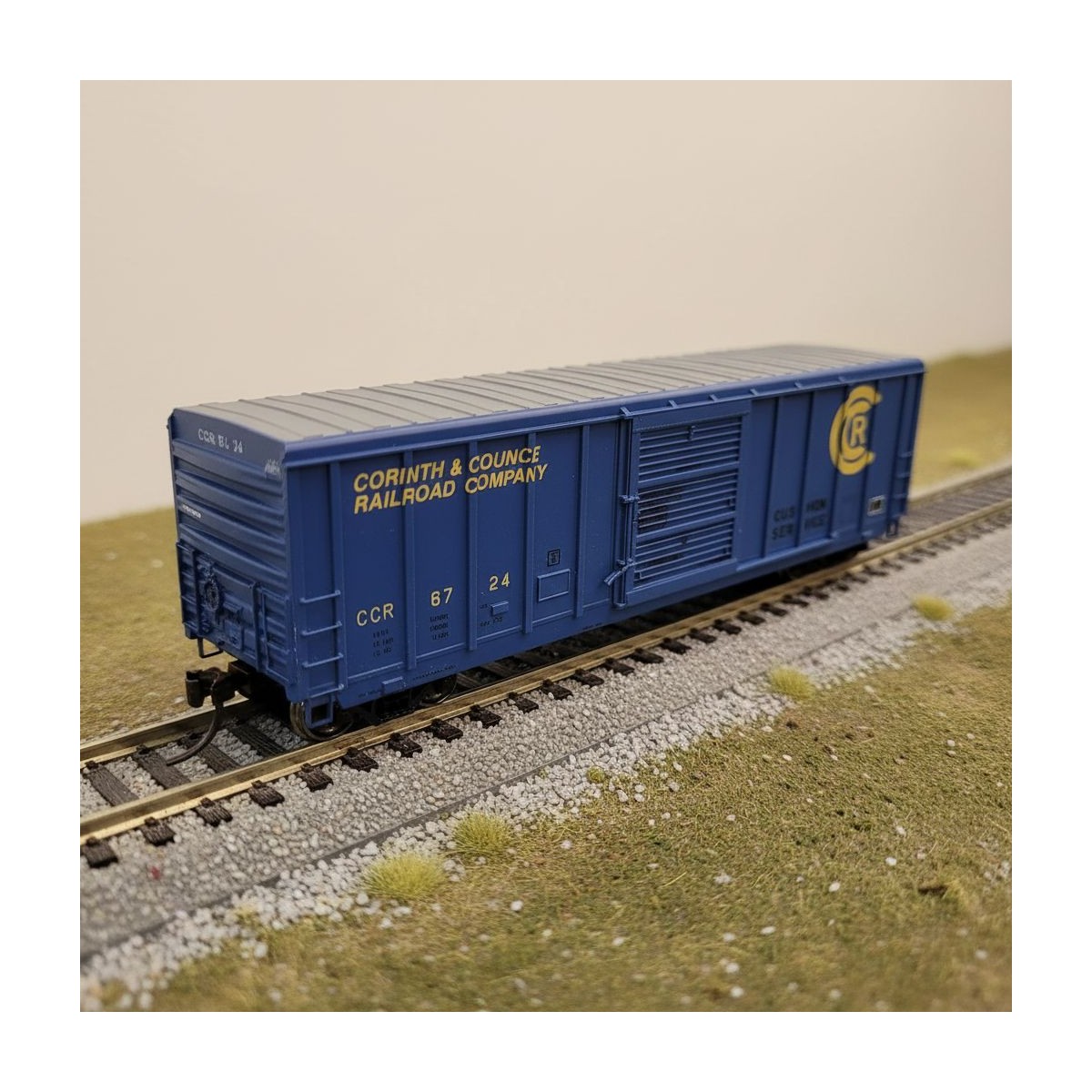
The Athearn ATH-2045 reproduces the Pullman-Standard PS-5344 closed box car of the Corinth and Counce Railroad, a short line operating in Mississippi and Tennessee that in the 1970s acquired brightly coloured wagons to take advantage of Incentive Per Diem rates. Car number 6724 ran through interchange yards across the United States, loaded primarily with pulp and paper products. Athearn presents it fully factory-assembled as part of its Ready-to-Run line.
Construction with individually applied details
What sets this model apart from a conventional box car is the way the exterior details are handled. Fine wire grab irons are installed piece by piece, not moulded into the body. The end ladders and hand brake wheel are separate components. The platforms over the couplers are made from photo-etched metal with a perforated pattern, giving them a transparency and visual scale that moulded plastic simply cannot match. The body faithfully reproduces the characteristic PS-5344 profile, with its vertical exterior posts that define the silhouette of this wagon type.
Mechanics and track compatibility
The wheels are nickel silver with an RP25 profile, suitable for Code 70, 83 and 100 track. McHenry couplers are body-mounted and fully operative. The underframe carries factory-applied weight to meet NMRA weight specifications, resulting in smooth, stable rolling. Minimum operating radius is 18 inches (45.7 cm), making it suitable for layouts with moderate curves.
Within a 1970s North American consist
On a North American layout set in the Incentive Per Diem era, this car fits naturally among rolling stock from other short lines and regional railroads. Its large-lettering livery, characteristic of the CCR, adds chromatic variety to a freight consist without breaking period coherence. Coupled behind a 1970s diesel locomotive alongside other box cars from different railroads, it helps build that mixed interchange train image so common in North American yards of the era.