Shopping Cart
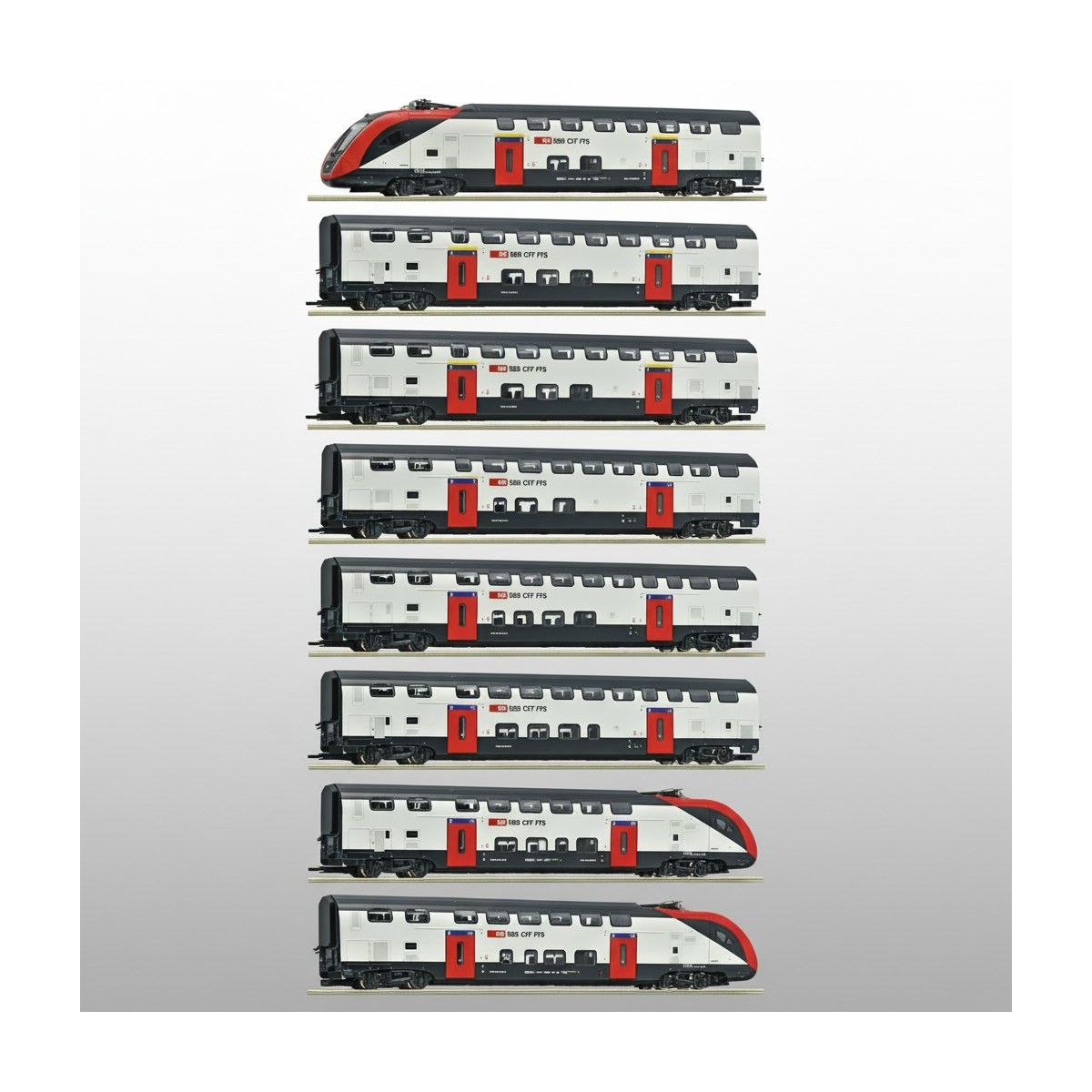
The RABe 502 known as the FV-Dosto on the Swiss network is one of the most recognisable double-deck trains in Europe today. Roco has brought it to HO scale in an eight-piece set spanning 2,306 mm, with onboard electronics designed so that every function responds with precision: three independent decoders, high-fidelity sound and a lighting logic that follows SBB signalling standards.
Three decoders for a 2.3-metre train
Distributing digital control across three separate units is a deliberate choice. The main decoder, housed in the powered intermediate coach, handles traction and all acoustic effects: motor noise, configurable horns, compressors, fans and the brake squeal on stopping. The two function decoders, one in each driving car, ensure that front and rear light switching is instantaneous at both ends no delays, no dependence on electrical transmission along the full length of the consist. The integrated stay-alive capacitor prevents micro-interruptions in sound or lighting when crossing turnouts or sections of track with inconsistent pickup.
Lighting and signalling to SBB standards
All coaches on both decks feature digitally controllable interior LED lighting. The destination boards front and side are functional and legible. The lighting logic comes factory-programmed to respect the Swiss railway code: three white headlights and a lower rear light in standard running, red tail lights in reverse, and a long-range headlight activatable by digital command. The set also includes configurable parking and emergency lighting modes from the command station.
On the layout: planning and running-in
At 2,306 mm of continuous length, this train needs a layout built with it in mind. The minimum running radius is 358 mm (R2 in the ROCO system), but Roco itself notes that the train looks far better on R3 curves or larger, where the double-deck coaches read as a coherent unit without forcing the perspective. For assembly, the coupling tool included with the driving car accessories is essential: it protects the pins of the current-carrying couplers when joining the pieces. Roco also recommends an initial running-in of 30 minutes in each direction at medium speed before putting it into regular service. Set against a long-platform station scene, the full consist naturally conveys the scale and visual rhythm of a modern long-distance passenger train in service.