Shopping Cart
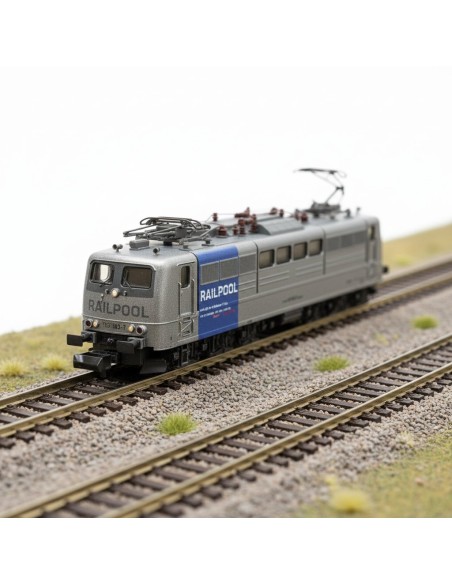
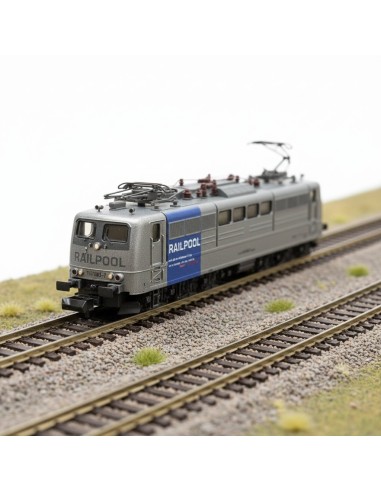
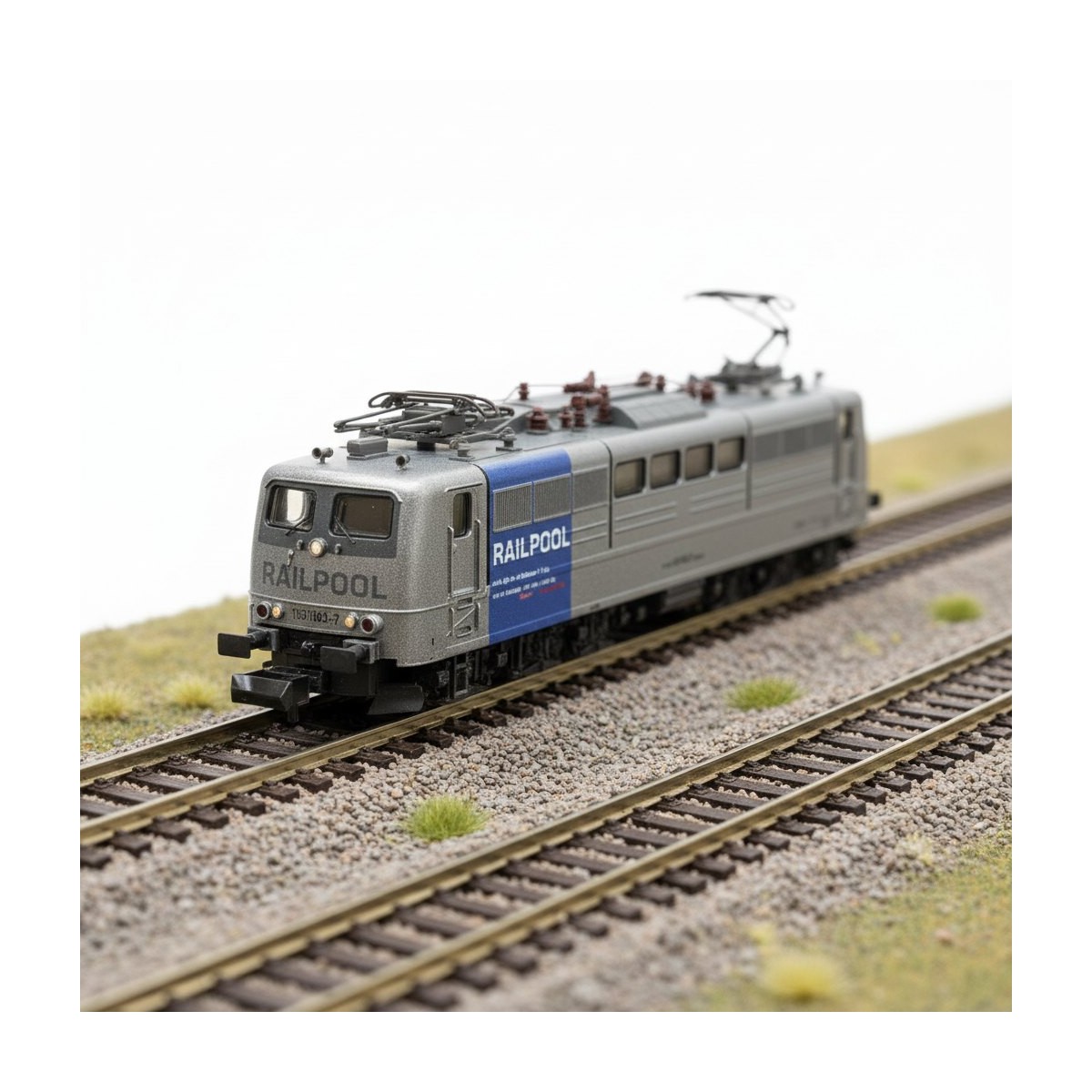
The BR 151 is one of the most recognisable six-axle electric locomotives in German railway history. Built between 1972 and 1978 in a run of 170 units, with an output of 5,962 kW and a weight of 118 tonnes, its long, robust silhouette gives it a strong visual presence in any consist. Fleischmann reproduces unit 151 062-7 here in the silver-grey livery with blue stripe characteristic of Railpool, the private rolling stock leasing company that operated this locomotive from 2017.
Digital with factory-fitted sound
The model comes with the MX648 decoder with regulated load and integrated sound no further work required. Lighting is provided by three LEDs in each cab, switching automatically with the direction of travel. The motor features a flywheel for smooth running, and drive is distributed across four axles, with one additional axle fitted with traction tyres. The coupling follows the NEM 355 standard with KK kinematics, and the NEM 651 interface with connector remains accessible for those who prefer to work with an external decoder.
Prototype and model data
The BR 151 prototype reached 120 km/h and was designed for hauling heavy trains. The reproduced unit, 151 062-7, belonged to Railpool until April 2025, placing it precisely in Era VI. The model measures 122 mm over buffers and accepts a minimum radius of 192 mm, making it easy to integrate into N scale layouts without the need for especially wide curves.
On the layout and in the consist
In N scale, 122 mm is a considerable length for a single locomotive: the BR 151 fills the head of the train well and sets the visual tone of the consist from the first glance. Leading a rake of Era VI freight wagons, the Railpool livery adds a restrained touch of colour grey and blue that distinguishes the formation without breaking the coherence of the whole. For anyone building a layout with contemporary freight traffic, this Fleischmann reference fits naturally into the scene.