
Shopping Cart
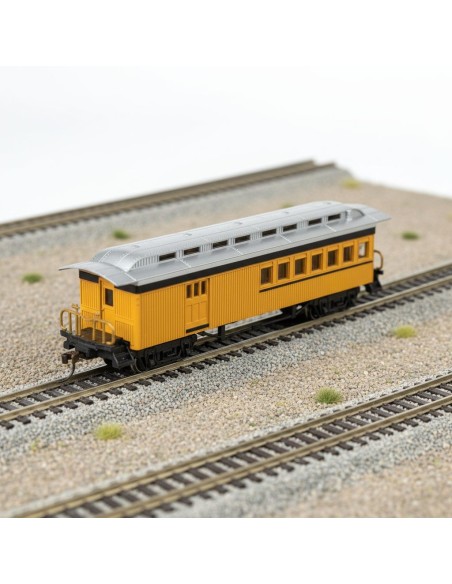
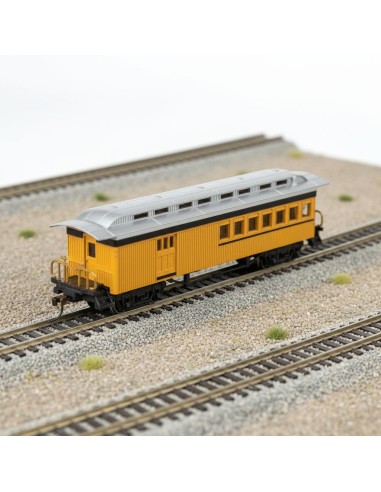
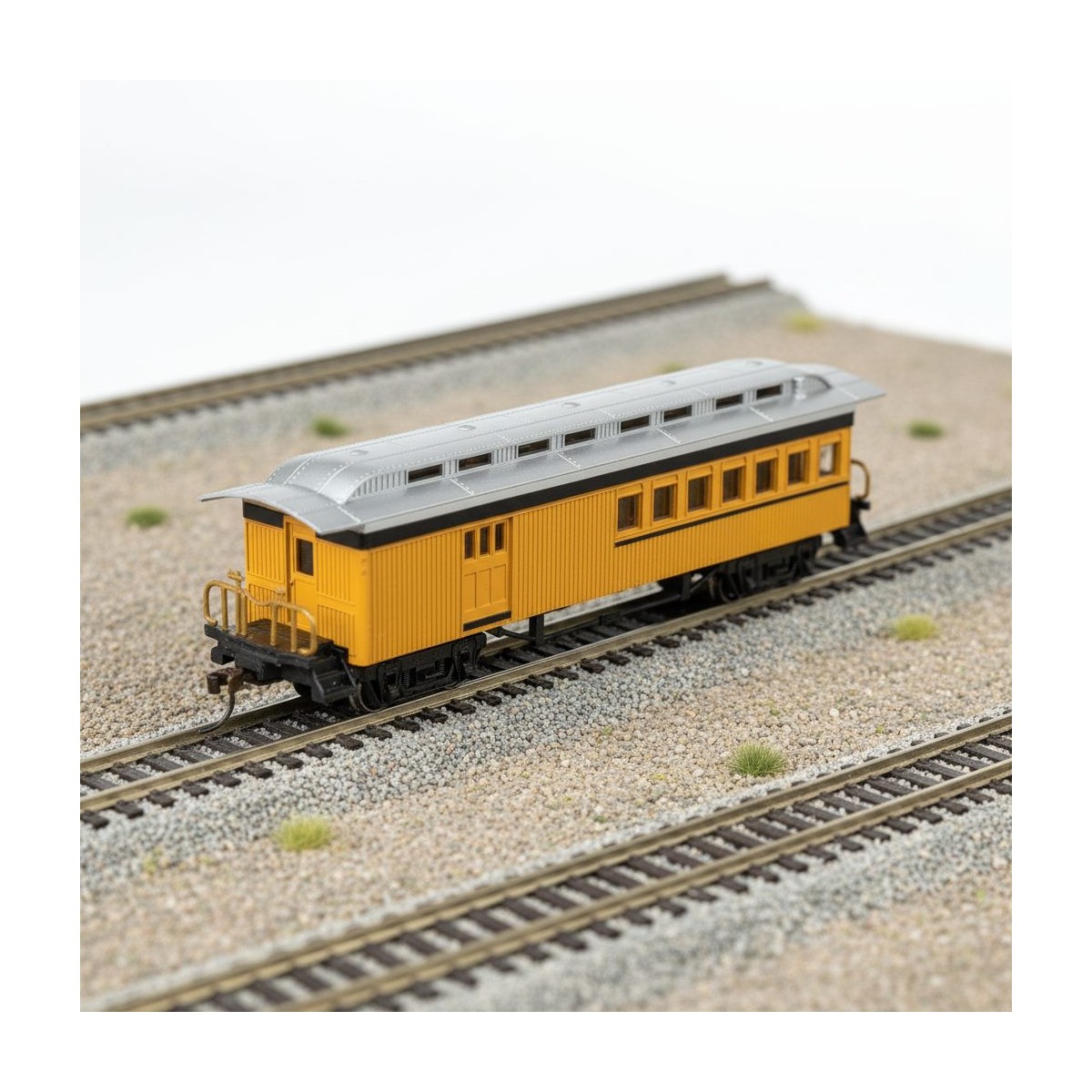
The Bachmann Combine reference 13503 belongs to the Silver Series® range and reproduces the American mixed-use passenger car of the 1860-1880 era: a vehicle that divided its interior between a baggage section and a passenger section, a common solution on branch lines where traffic did not justify two separate cars. The finish is unlettered yellow, making it easy to integrate into your own consists without tying it to any specific railroad company.
A passenger car with its own visual character
The body simulates the vertical wood plank sheathing typical of 19th-century car shops, and the Duckbill roof with its flat central clerestory projecting above the open end platforms gives it an unmistakable silhouette within the train. The open platforms at both ends, with separately applied railings and handrails, reinforce that reading of historical rolling stock without needing any extra detailing. Clear window glazing completes the look from the outside.
Silver Series® wheelsets and magnetic couplers
The wheels are blackened metal with RP25 profile and non-magnetic axles, a specification that ensures smooth running through turnouts and across track from different manufacturers. The underframe truss rods are separately applied, adding visual depth to the underside of the car. The E-Z Mate® Mark II couplers, body-mounted, allow automatic uncoupling via magnets placed under the track. Overall length is 165 mm (6.5 inches).
Role within an Old-Time consist
In a period American formation, the Combine typically runs close to the locomotive, just behind the tender or baggage car, marking the start of the passenger section. Paired with the Coach from the same series and finish, it helps the train gain visual coherence and length without losing the rhythm of 19th-century wooden rolling stock. The unlettered yellow finish also makes it easy to use across different layouts without committing to a specific railroad identity.