
Shopping Cart
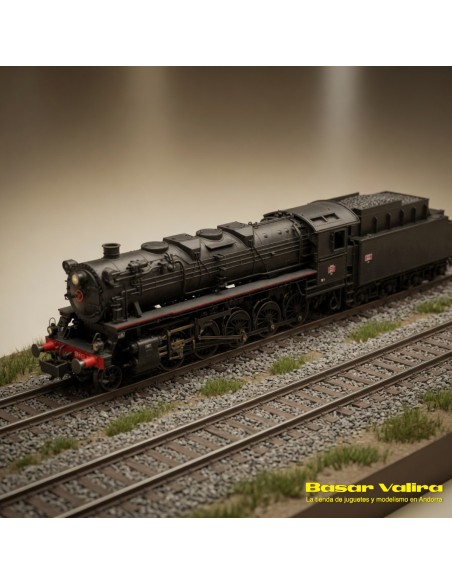
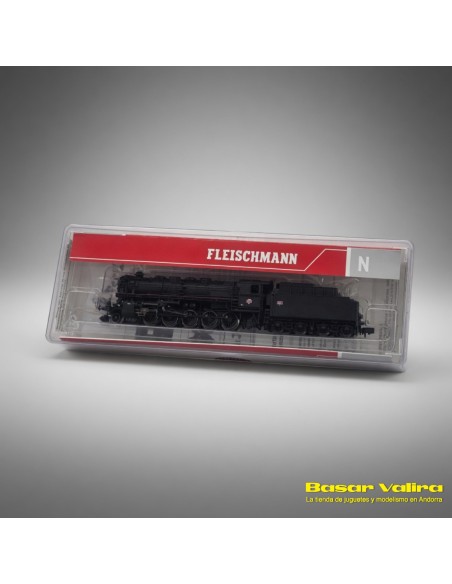
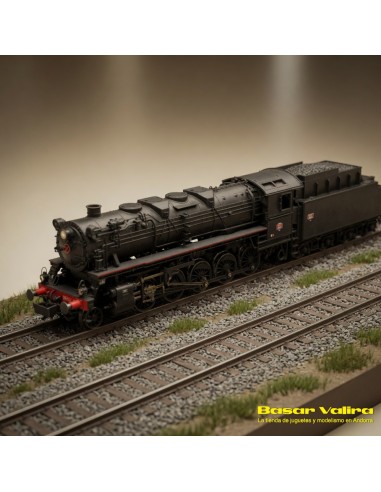
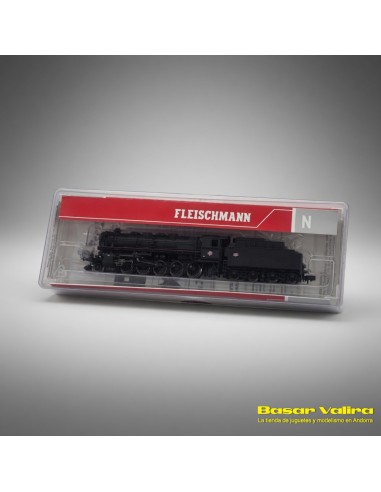
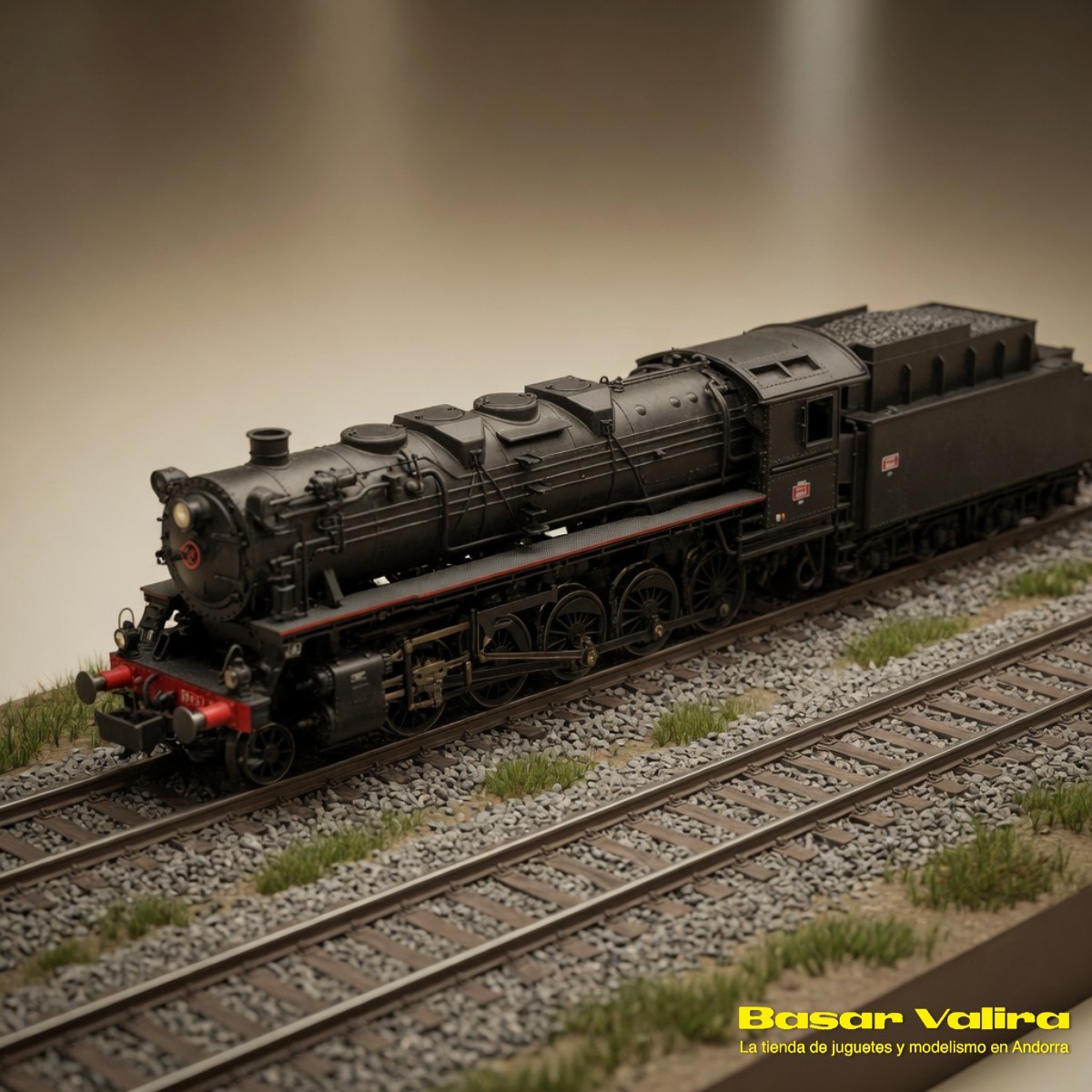
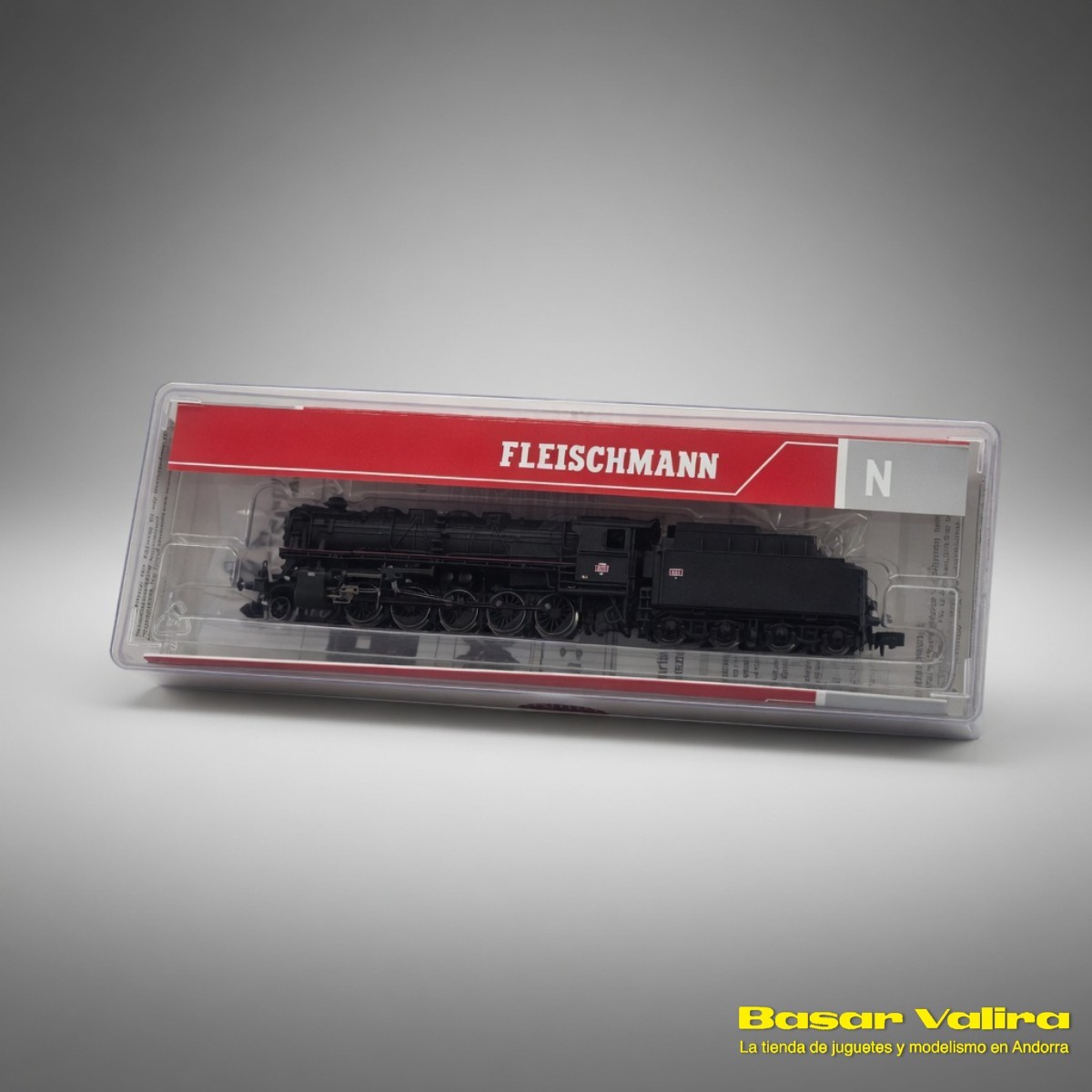
The Fleischmann 714407 reproduces the SNCF steam locomotive 150 X 5 in N scale, with integrated tender and a total length of 141 mm. It belongs to Era III, the post-war period during which the SNCF incorporated into its fleet a series of locomotives of German origin the former class 44 ÜK type reassigned after the Second World War and classified as 150 X, with a total of 226 units numbered 1 to 226. The model is presented in black livery, without smoke deflectors, offering a clear view between boiler and chassis that lets you take in the whole assembly at a glance.
A freight steam locomotive with its own story within the SNCF
The 150 X class has a singular background within the French fleet: locomotives of German origin absorbed into the SNCF network as a direct consequence of the post-war context. On a layout, a consist headed by this 150 X 5 captures that atmosphere of the fifties and sixties, when inherited rolling stock ran alongside newly built machines. The locomotive-and-tender combination gains real visual presence on the track, especially in freight yard scenes or period station settings.
Confirmed technical specifications
The model features a 3-pole motor, LED lighting with reversible front headlights by direction of travel, NEM 355 mechanical coupler and a Next18 interface for straightforward decoder installation without further modifications. It runs on analogue DC over 2-rail track, with a minimum radius of 192 mm. The driving axles have reduced wheel flanges, making it easier to negotiate tighter curves within the stated limits.
Layout integration and consist building
At 141 mm long, the 150 X 5 occupies a sensible footprint in N scale without losing the feel of a full steam locomotive with tender. Leading a rake of Era III freight wagons, the consist gains visual coherence: the locomotive adds bulk at the head and the tender extends the reading of the train before the wagons begin. For those working with moderate-radius layouts, the 192 mm minimum allows it to fit into compact designs without compromising the naturalness of the running.