
Shopping Cart
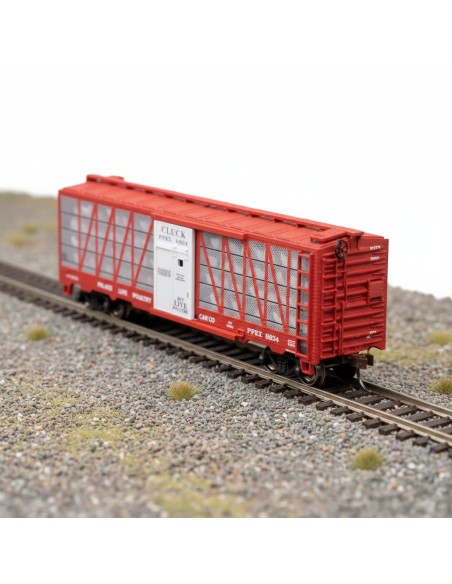
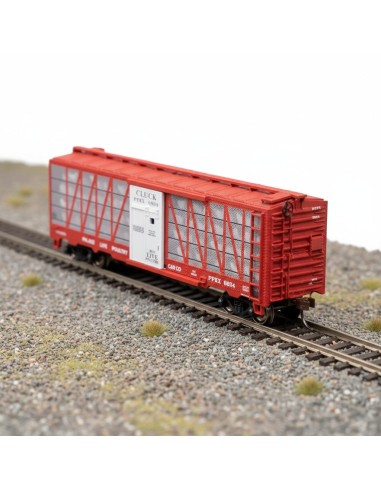
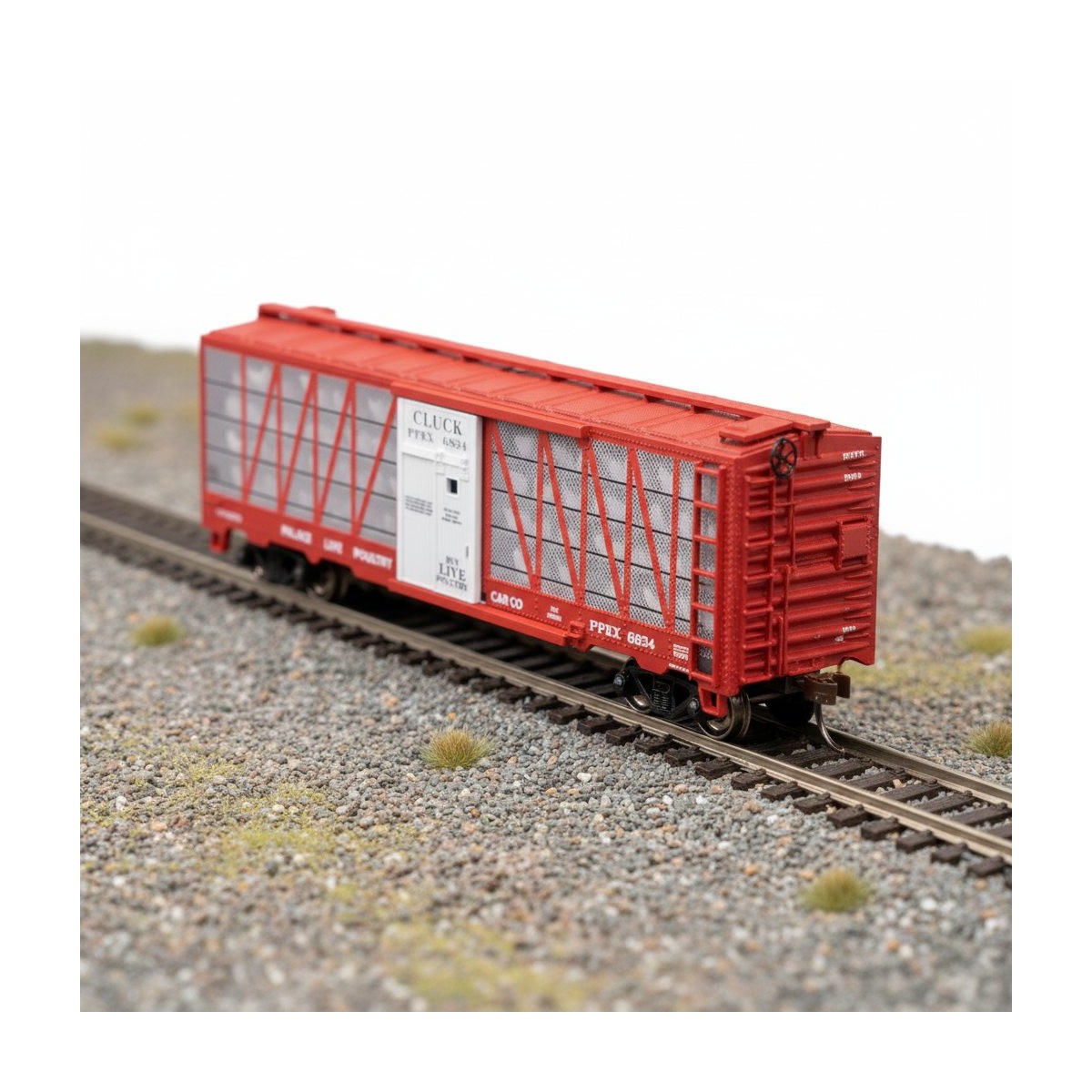
In a North American freight consist, this wagon earns its own place. Bachmann's Poultry Car reproduces the cage-type wagon that ran across North American tracks from the late nineteenth century to the mid-twentieth, when transporting live poultry by rail was common practice before cold chain logistics changed the food industry. The decoration belongs to the Palace Live Poultry Car Co., with route name Cluck and number 6834, in a red/brown and white two-tone scheme with precision lettering that includes simulated technical data such as load limits.
A wagon with real character in the consist
What sets this model apart visually is its open-sided body: the injection-moulded plastic reproduces the texture of the prototype's wire mesh and grilles, and viewed from the side you can make out the silhouettes printed inside simulating caged chickens. Slotted between more conventional freight stock, it breaks the visual monotony of the train without feeling out of place. The central access door used on the prototype by the attendant who travelled on board to feed the birds is also represented on the model, alongside the operating sliding doors.
Silver Series: mechanics built for running
This wagon belongs to Bachmann's Silver Series, the brand's ready-to-run freight line. The trucks are made from Celcon, an engineering plastic that reduces friction and wear. The wheels are blackened machined metal with an RP25 profile, compatible with Code 100, Code 83 and Code 70 track. The non-magnetic brass axles end in needle points that minimise drag. The E-Z Mate® Mark II couplers are body-mounted rather than truck-mounted, allowing smooth operation through complex turnouts without risk of jackknifing. The internal weight is optimised to NMRA standards, and the confirmed minimum radius is 45.7 cm (18 inches).
How it fits into a layout
In a freight yard scene or a period North American freight consist, this wagon adds typological variety without breaking the coherence of the whole. Its length of 16.5 cm makes it easy to handle within multi-wagon trains, and its open-sided design clearly sets it apart from standard closed stock. For anyone building freight consists with historical intent, a wagon like this is a reminder that North American railroads carried far more than coal or timber.